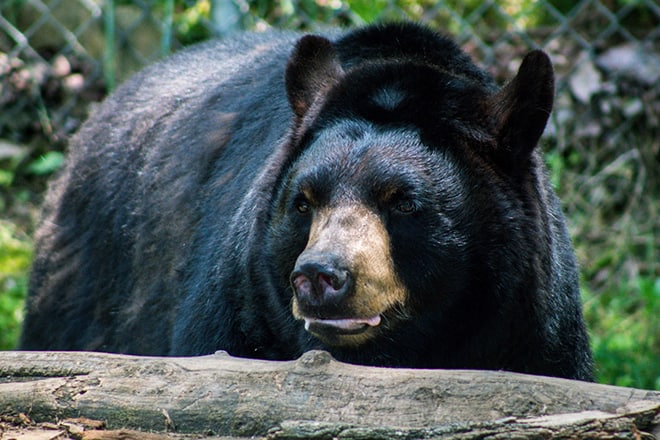
American Black Bear
Generally shy and reclusive animals, black bears avoid human contact and are not normally aggressive. Two black bears, Uno and Ursa, live at the Nature Center.

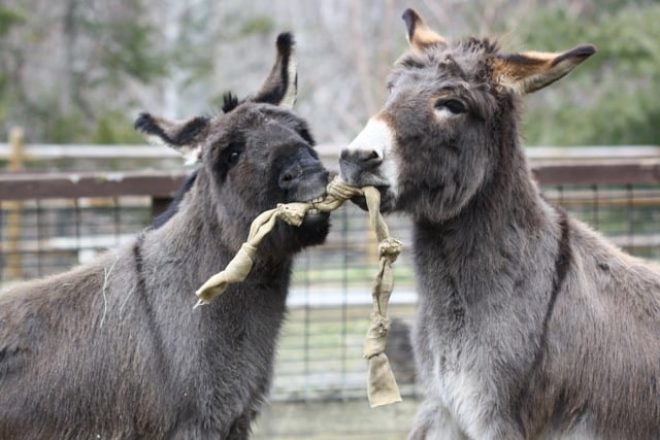
Equus asinus
Appearance: Slightly stockier than a horse, Sicilian donkeys have large ears and are usually light brown to gray in color. They also have some white on their muzzle.
Behavior: Donkeys are very social and need the company of other donkeys or animals. Contrary to popular belief, they are very clever.
History: The donkey was domesticated long before the horse.They have retained some aggression from their wild ancestors and if attacked, they will form a circle and fight the predator with their hooves. Donkeys are highly resistant to disease. They were used as work animals for transportation, pulling wagons, and as pack animals more in the past than today. The donkey became popular because of their few needs, cautiousness, and bravery. Besides being good companions to people, donkeys can be good company for other domestic animals. They are used to protect livestock from predators and are often used in rehabilitation work with people with disabilities. Sicilian donkeys have distinctive cross-shaped markings along their backs and are known for their sweet affectionate disposition.
Range: Domesticated donkeys can be found around the world but are native to Africa.
Diet: They mainly eat vegetation including grasses and hay.

Date of Birth: August 17, 2001
Willy was born on a farm in North Carolina and came to the WNC Nature Center in August 2006. He is much smaller than Eeyore.
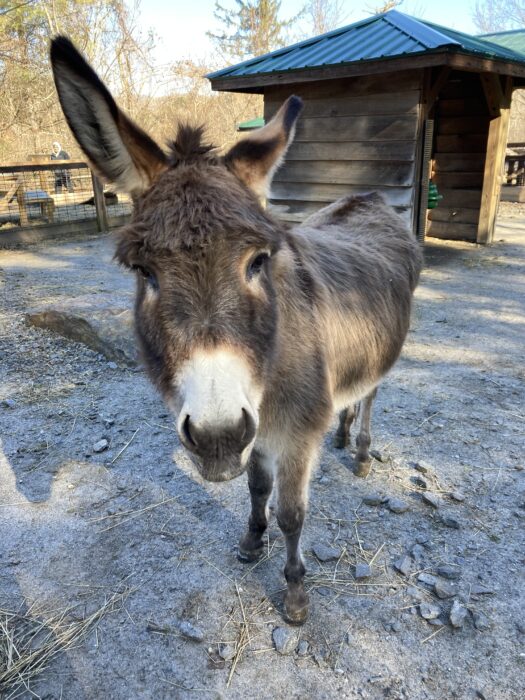
Date of Birth: August 3, 2001
Eeyore was born on a farm in Weaverville, North Carolina and came to the WNC Nature Center in March 2002.
Generally shy and reclusive animals, black bears avoid human contact and are not normally aggressive. Two black bears, Uno and Ursa, live at the Nature Center.

Similar to the Nigerian dwarf goat, the American pygmy is a small goat that only reaches 1-2 feet in height. They vary widely in coloration including white, tan, caramel, gray, and black.

Red wolves are highly endangered species that has been eliminated from almost all of its natural range. Our breeding pair of red wolves, Oak and Gloria, are part of the AZA Species Survival Plan.
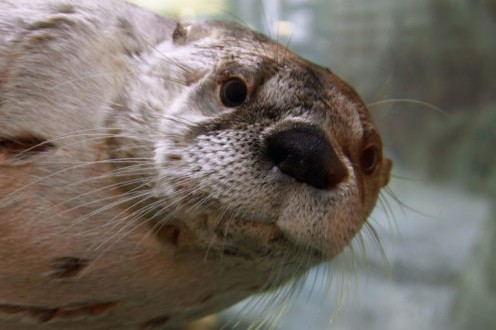
River otters are masterful in the water and often show a playful side!